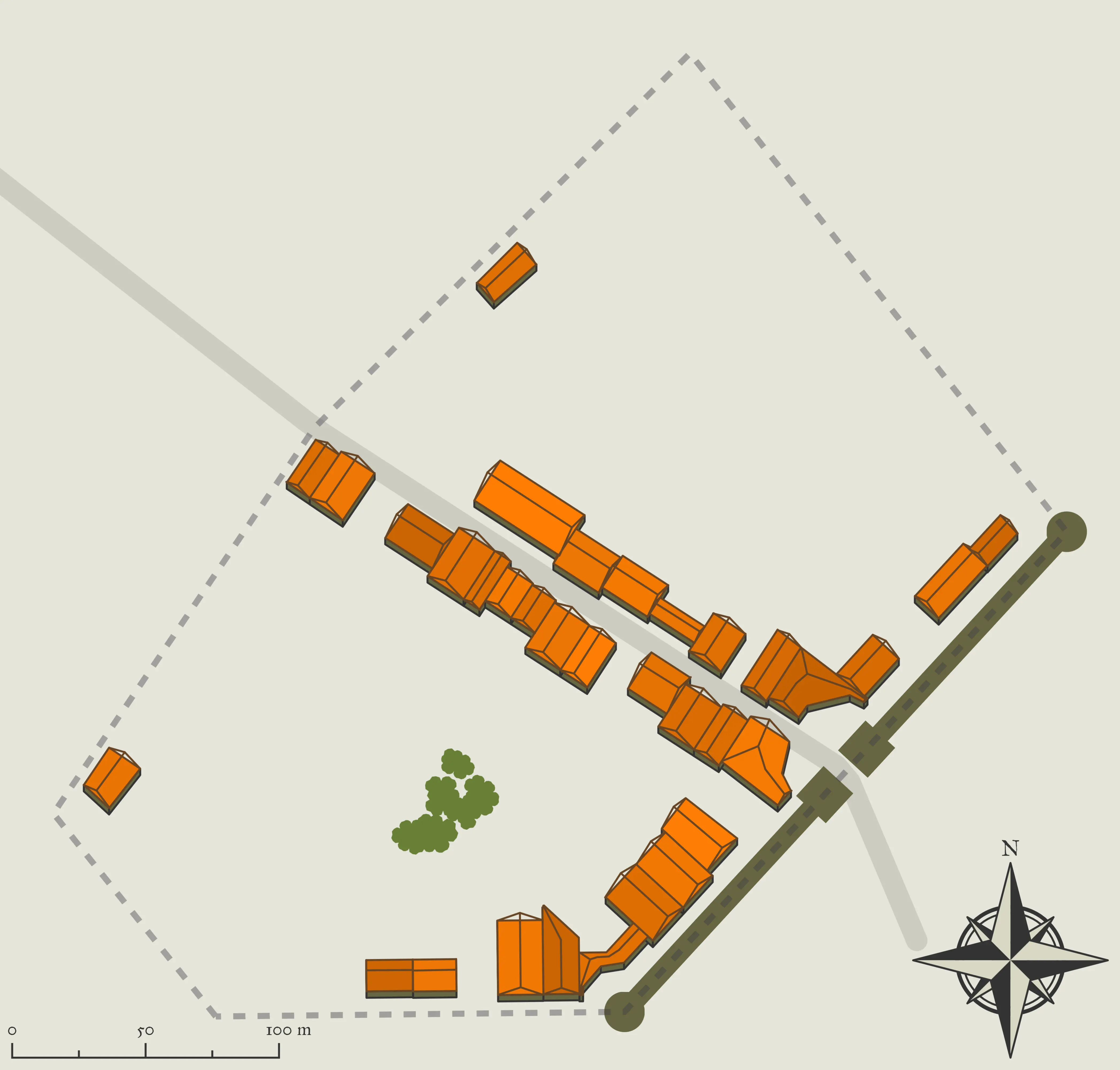
Feygarden lies northwest of the city walls, straddling the road that connects Chrysalis to the farmland and forests beyond. It began as a staging point for rural workers coming to sell their goods in the city—somewhere to rest horses, sleep the night, and store produce—and has grown into a permanent community that straddles the line between urban and rural.
The district maintains a strongly agricultural character. Tending the fields that feed the city, managing the forest edge, and keeping the roads in good repair are Feygarden’s primary concerns. People here are connected to the old druid traditions of Terra—not in a formal, institutional sense, but in the practical way that comes from living close to the land. Druidic gardens are known to exist hidden in the area, accessible to those who know where to look or who need them badly enough.
Character: Natural, relaxed, rural-connected
Notable features:
- Working farms and market gardens supplying the city
- The Feygarden Tavern (proprietor: Frank the goblin; owner: Hodor)—a social hub for the district
- Stables and animal handling
- Designated plots worked by New Church clergy and Snowford scholars for their own production and research needs
- The Druidic Garden of Cats (hidden; accessible to those in need or those invited by the guardian spirits)
- Rural craftspeople and healers using traditional methods
Worship: Feygarden’s spiritual life is informal and nature-rooted. Small cairns, carved stones, and offering spots mark significant trees and field edges throughout the district. The Druidic Garden of Cats, with its guardian spirit Bastet, is the most significant spiritual site—but it reveals itself only to those it chooses. Shrines to gods of harvest, home, and fortune appear seasonally at the market.
Population character: Farmers, drovers, rural craftspeople, druids and rangers, and city workers who prefer open air to cramped streets. Feygarden is also home to a number of people who arrived from the wilderness—goliaths from the mountain communities, travellers who stopped meaning to pass through—and never quite left.